
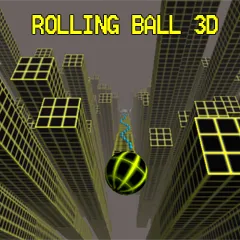

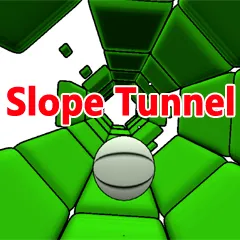




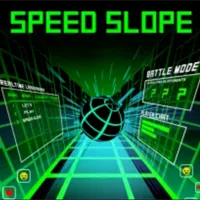


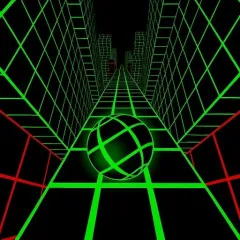
The ball rolls forward on its own. Use Left Arrow or A to steer left, Right Arrow or D to steer right (mobile layouts typically mirror this with taps on each side). Keep your eyes slightly ahead of the ball and favor small corrections, oversteering near edges is the fastest way to donate a run.
What's Slide Down game?
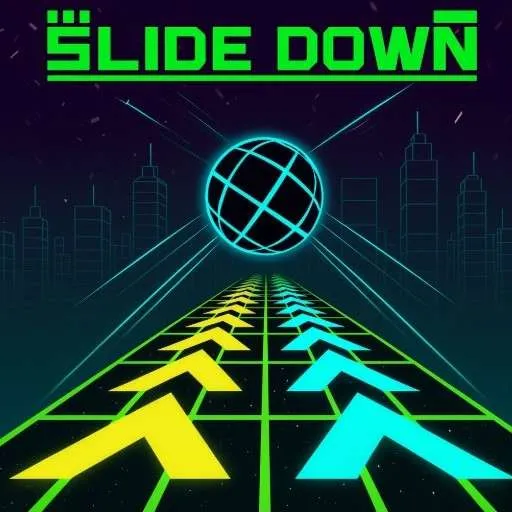
Slide Down is a fast 3D endless runner built around one stubborn idea: keep a rolling ball on rooftop tiles while gravity, momentum, and the track itself try to throw you off. You are not solving puzzles or grinding upgrades, you are threading gaps, surviving tunnels and narrow bridges, and turning every clean segment into distance on the scoreboard. The presentation leans futuristic: neon city light washes over tilted surfaces, and the physics read clearly enough that when you crash, it usually feels like you earned it.
Progress is measured in how many rooftop sections you clear before an obstacle, a bad landing, or the abyss resets the run. Sloped roof faces naturally accelerate the ball, so steering is less about dramatic turns and more about calm line choice. Speed boosters can spike your pace in an instant, which sometimes helps you carry over a gap but always tightens the window for correction. Jump boosters behave like launchers: they can send you soaring into new zones with sharper layouts and faster pacing, which is powerful when you are ready, and punishing when you are not.
The loop is deliberately addictive: short runs, instant restarts, and difficulty that ramps the longer you survive. There is no mid-run revive and no pause once you commit, only focus, reflexes, and the hope that this attempt will beat your previous best. On this page you can launch the embedded build in your browser, skim the three-step guide below, and use the FAQ for the common “why did I fall?” questions before you chase a new personal record.
How to Play Slide Down
1
1. Steer the lane, stay on the roof
2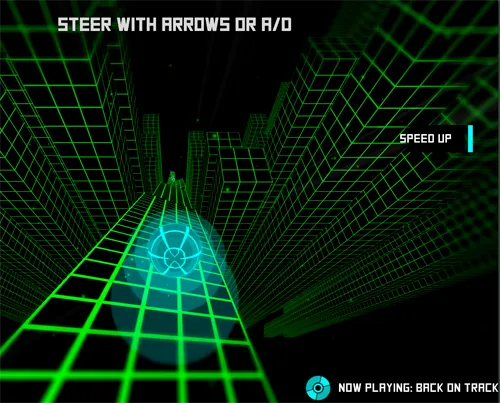
2. Respect gravity, speed, and boosters
Downhill surfaces add speed whether you like it or not. Ground boosters push you harder still: they can help clear certain gaps, but they also shrink reaction time. When momentum spikes, treat the space directly in front of the ball as sacred ground, sudden blocks and tight chokes punish greedy lines.
3
3. Decide when jump pads help or hurt
Jump boosters can launch you high, sometimes into new track styles with more hazards. Use them when you have a plan; avoid them when you are already unstable. Each successful crossing adds to your score, so prioritize survival first, flashy airtime second. Crash or fall, restart immediately: every attempt trains timing for the next segment.
What makes a strong Slide Down run
High scores in Slide Down are less about memorizing a single perfect route and more about habits. Center bias matters: hugging the middle of a tile buys a fraction of a second when the layout kinks, which is often the difference between clipping a hazard and slipping through. Anticipation matters even more than raw twitch speed, when the game accelerates, the mistakes look like “I reacted too late,” but the fix is usually “I started reading the track one beat earlier.”
Jump boosters deserve their own decision tree. They are not automatically good or bad; they are commitments. A launch at the wrong angle, or at a speed you are not controlling, turns a recoverable wobble into a long flight with a bad landing. If you are still learning the basics of steering, skipping a jump pad is a legitimate strategy. If you are chasing distance records, learn which pads send you into layouts you can actually pilot, rather than treating every booster like a lottery ticket.
How Slide Down compares with other slope-style games
If you have played classic downhill ball runners, Slide Down will feel familiar within the first minute: one axis of steering, endless forward motion, and a difficulty curve that tightens as you survive. Where it stands out is how aggressively it mixes rooftop geometry, speed spikes, and jump-driven zone changes, so the skill ceiling rises not only from reflexes but from choosing when to accept extra risk.
Compared with the original Slope formula, Slide Down leans into booster-driven pacing shifts and more varied platforming beats. If you enjoy sequels with extra twists, Slope 2 (this site’s main game on the homepage) and Slope 3 are natural neighbors, different art passes and obstacle vocabularies, same obsession with clean lines and personal bests. Slide Down keeps the presentation comparatively minimalist: no cosmetic ball skins to grind, so improvement is measured almost entirely in how far you roll.
Unlike rhythm-platformers with fixed levels, Slide Down stays reactive: the track keeps changing, and the threats are read on the fly. That unpredictability is why the restart loop feels fair, each failure teaches a micro-lesson you can test on the very next attempt.
Practical tips for distance and consistency
- Steer in short bursts: hold keys only as long as needed; smooth arcs beat sawtooth zigzags.
- Do not fight the camera with panic: when speed jumps, widen your mental “read window” and plan two hazards ahead.
- Treat edges as debt: the closer you shave a rim, the less margin you keep for tunnels and moving threats.
- Practice one variable per session: centering discipline, booster discipline, or gap timing, then compare distances.
- Keep the tab light: stuttery frames make precise steering harder; close heavy background tabs if the embed feels sluggish.
FAQs about Slide Down
Yes. You can start a run in your browser without installing anything. Performance depends on your device and network because the build loads through the embedded player.
On keyboard, use Left Arrow or A to steer left, and Right Arrow or D to steer right. Many mobile browsers map steering to tapping the left or right side of the play area.
No. Slide Down keeps the experience minimalist and skill-focused, without cosmetic ball options.
Common causes are oversteering, hugging the rim too aggressively, bad landings after jump boosters, and losing focus when speed spikes. Small, early corrections usually beat late hero swerves.
No. Once a run starts it continues until you crash or fall. Treat each attempt as a short sprint of attention.
Prioritize survival first: smooth steering, early hazard reads, and disciplined booster choices. Retry quickly, short cycles turn mistakes into muscle memory faster than long breaks between attempts.
Use the fullscreen control near the player if your browser offers it. On some phones, fullscreen only unlocks after you tap the game surface once.