





The snake advances automatically. Use the Left and Right arrow keys to shift sideways and hunt for safe passages when trunks crowd the lane. Trees spawn as obstacles rather than as a memorized dance, so you win by scanning slightly ahead of the head and favoring the center band whenever the corridor allows. One glancing hit ends the attempt, treat every gap as narrow until you prove otherwise.
What's Slope Scratch game?
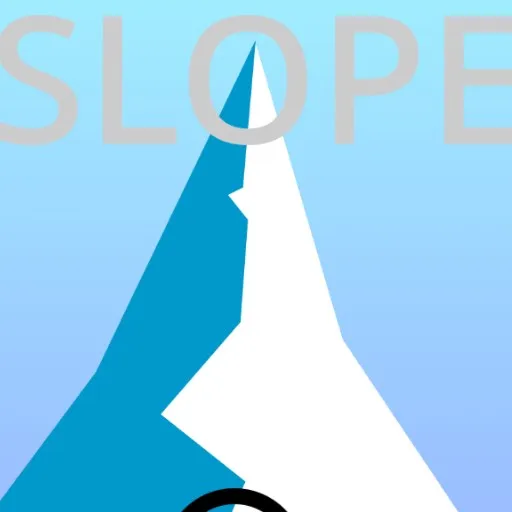
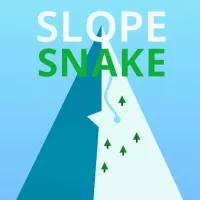
Slope Scratch is a winter-themed endless runner with a deliberately simple look: you steer a snake-style body that slides forward on its own through a frozen forest corridor. The fantasy is not combat or crafting, it is friction, ice, and spacing. Frozen trees appear in your lane, the edges of the path punish every drift, and the longer you survive, the more the pace demands that you stop reacting and start reading.
The presentation borrows a quiet holiday mood without turning into clutter: pale snow, dark trunks, and a narrow ribbon of safe ground that still manages to feel slippery under pressure. Your score is tied to endurance and distance, so every extra second is both reward and risk. One small collision with timber or a careless drift off the icy rim ends the run immediately, which keeps sessions short and restarts honest.
Under the hood the experience is delivered as a lightweight block-coded project in the style many schools already teach, readable logic, clear rules, and a loop that still feels sharp on a keyboard. That lineage matters because it explains the controls: left and right steering only, no mid-run shopping layer, no elaborate combo system, just lane discipline and timing.
On this page you get the same shell as the rest of this site, header and footer, two-column layout with the green-line atmosphere, and a click-to-load player so the heavier frame waits until you press play. Skim the three-step guide, read the longer sections for habits at high speed, then use the FAQ before you chase a new personal best.
How to Play Slope Scratch
1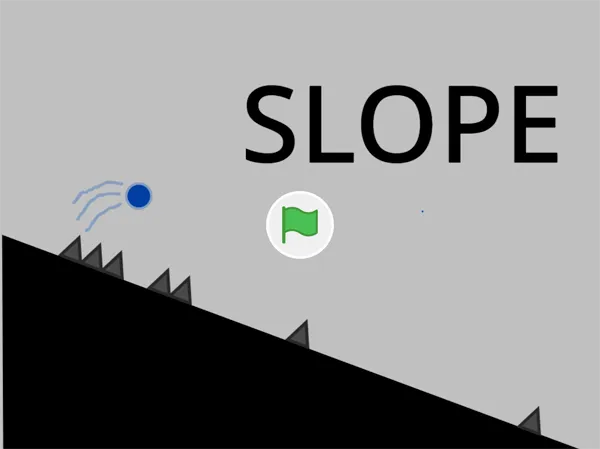
1. Thread the forest: find gaps between frozen trees
2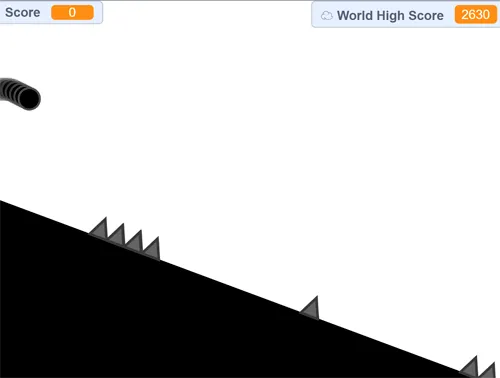
2. When speed climbs, shrink your steering and widen your read
After the opening seconds the slide accelerates. Inputs that felt generous early become dangerous late: long key holds turn into sawtooth zigzags, and zigzags send you into edges. Prefer tiny corrections, then return toward center. Look farther up the path than feels natural, at high tempo, the hazard you need to dodge is rarely the one touching your nose.
3
3. Respect downhill momentum and icy edges
Steep segments exaggerate lateral motion: a turn that felt mild on flat ice can feel sharp after a drop. Bank a little extra margin before the slope commits you to a line. Falling off the rim is as final as hitting a tree, so treat the border like a hard wall. If you survive a squeeze, rebuild centering before the next kink instead of celebrating with a wide arc.
Why the winter forest setup changes how you read danger
Many endless runners lean on neon abstraction so hazards glow like traffic lights. Slope Scratch does the opposite: it keeps the palette quiet so trunks and shadows do the talking. That makes depth cues subtler, you learn to recognize a choke by how much sky disappears between branches, not by a flashing outline. The skill shifts from pure twitch toward pattern speed: the faster you classify “gap versus wall,” the calmer your hands can stay.
Because trees appear as semi-random lane blockers, the fair move is rarely “memorize this seed forever” and often “keep a default line that survives surprises.” Center bias is not cowardice; it is insurance. When the forest tightens, the center buys a beat to decide whether to slip left or right. When the path widens, the center still keeps you away from both rims at once, until the layout baits you with a diagonal that punishes greedy drift.
Instant failure on contact keeps the emotional contract clean. You are not grinding hit points or waiting for a revive animation; you are protecting a single clean thread of motion. That purity is why the restart loop still works after many attempts: each crash leaves you with a concrete adjustment to test on the next run.
Speed curve, micro-steering, and edge discipline
The difficulty curve is front-loaded into “stay alive long enough to feel the real game.” Early seconds reward wide eyes and soft hands; later seconds punish the same player if they never upgraded from big swings to micro nudges. If you feel the snake getting away from you, slow your fingers first, panic steering scales terribly with momentum.
Downhill stretches add a second layer: gravity does not pause while you rethink a line. Momentum makes turns feel sharper than the same geometry would on flat ground, which is why cautious players stage their approach before the drop and aggressive players sometimes learn the hard way that the edge comes faster than the tree.
Treat both rim and trunk as the same class of threat: anything that stops lateral freedom is a debt collector. The winning habit is to rebuild margin after every correction, survive a squeeze, return to center, breathe, then read the next segment.
Where Slope Scratch fits on this site
If you want the flagship downhill ball experience, start with Slope 2 on the homepage or the lean classic Slope page. Scratch sits beside those as a lighter, winter-skinned cousin: fewer visual layers, more classroom-friendly presentation, and the same obsession with distance under pressure.
If you prefer full 3D sledding with jump inputs, try Slope Rider for a different obstacle vocabulary. Rotating between titles keeps your eyes fresh while preserving habits: read ahead, steer in bursts, and respect edges before they respect you.
This page uses the same click-to-load pattern as other games here, so you choose when the embedded player starts. Give the frame a moment on first load if your network is busy, block-based runners still stream like any other web content.
FAQs about Slope Scratch
Yes. You can start a run in your browser without installing anything. Because the build loads inside an embedded player, performance depends on your device, browser, and network.
Use the Left Arrow key to steer left and the Right Arrow key to steer right. Follow any on-screen hints if your browser maps keys differently on first load.
This template focuses on lateral survival on a slippery path. There is no separate jump or brake button in the usual control scheme, planning and tiny steering corrections carry the run.
Hitting a frozen tree or falling off the side of the icy path typically ends the attempt immediately. Restart quickly so each failure becomes a small adjustment instead of a long break.
The run speeds up the longer you survive, which shrinks the time window for each correction. Look farther ahead and shorten your inputs as tempo increases.
Embedded projects can take a few seconds on cold start, especially on school networks or older hardware. If nothing appears after a reasonable wait, refresh once and try again with fewer heavy tabs open.
Use your browser fullscreen controls around the embed when available. On some mobile browsers you may need to tap the project surface once before fullscreen unlocks.