





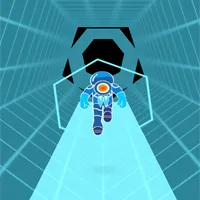
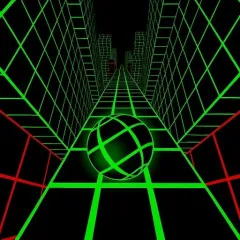
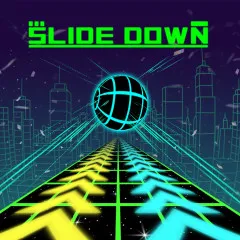
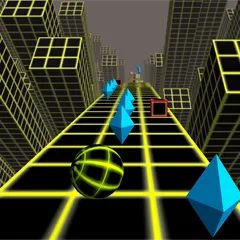


What's Slope Slide game?

Slope Slide drops you onto a brutally steep ribbon of ice and asks one question: how far can you keep a small cube alive while the world tilts faster beneath it? You are not building, crafting, or grinding currencies, you are threading a corridor of red hazards, static walls, and moving blocks that slide across your lane to erase sloppy lines. The cube obeys momentum: it accelerates as the run deepens, and the camera stays tight so every twitch reads on screen.
Each attempt can feel a little different because the slope layout is generated anew rather than replayed as a single memorized stage. That keeps the focus on reflex and reading speed instead of rote choreography. Physics still matters: the cube skids and bounces on ice in ways that reward calm inputs over panic taps. You can sometimes kiss the edge of the track to shave a hint of speed, but the margin is thin, treat the rim as a brake only when you already have a recovery plan, not as a safe place to camp.
Failure is blunt and fair: brush a hazard or fall off the platform and the run stops. There is no mid-run revive in the classic pattern, only restart, breathe, and try a smaller correction next time. The skill curve hides inside that simplicity: early seconds reward wide eyes; later seconds punish the same player if they never graduate from big swings to micro-steering.
On this page you get the same shell as the rest of this site, header and footer, two-column layout with the green-line atmosphere, and a click-to-load embed so bandwidth waits until you press play. Skim the three-step guide, read the longer sections for hazard vocabulary and jump discipline, then use the FAQ for controls before you chase a new personal best.
How to Play Slope Slide
1. Move with WASD and keep the cube on the ribbon
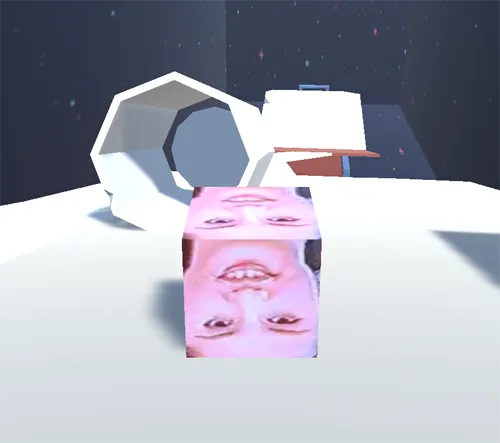
2. Read red blocks and moving traps two beats ahead
Static red geometry and sliding obstacles share one rule: contact ends the run. Look farther down the slope than feels comfortable so you see gaps before they become emergencies. Speed ramps the longer you survive, which shrinks the window for each dodge, when tempo spikes, shorten inputs and trust boring centering over flashy lines.
3. Jump only when you can afford the airtime
Jumping clears some traps, but you cannot fine-tune steering the same way while airborne, avoid sky-high hops unless the landing is obvious. Chain small hops and direction changes instead of one heroic arc. When the layout mixes moving blocks with narrow ledges, prioritize survival over style: a boring line that lives beats a clever line that clips.
Hazard vocabulary: what the course is really testing
Slope Slide teaches you a compact language of threats. Red blocks read as hard stops: you either thread a gap or you restart. Walls narrow your lane without warning, which punishes players who drift on autopilot. Moving obstacles add timing, you are not only choosing left or right, you are choosing when, because a lane that was open two frames ago can close when a block finishes its sweep.
Because speed increases as you survive, the same geometry feels different at minute zero versus minute one. The mistake players repeat is fighting the current speed with the steering habits of the opening pace. The fix is almost always the same: look farther ahead, shrink corrections, and rebuild centering after every dodge so the next trap meets you with margin instead of panic.
Instant failure keeps feedback honest. When you die, you usually know whether it was late recognition, greedy air, or an edge gamble. That clarity is what makes the loop sticky: each crash suggests one variable to change on the very next attempt.
Camera, procedural slopes, and ice physics
A tight follow camera sells speed without hiding the information you need. You feel drops and turns because the frame reacts to momentum, not because the screen shakes randomly. That matters when you are deciding whether a gap is wide enough at current velocity, your eyes need trustworthy depth cues, and the build leans on contrast and motion parallax to provide them.
Procedural generation means you cannot memorize one perfect route forever. Instead you memorize habits: default lines, safe margins, and the order in which you scan for moving threats. Ice physics reward players who think in arcs: the cube carries inertia through small hops and skids, so the winning move is often a staged line rather than a last-instant flick.
When you experiment with edge friction to shave speed, treat it like borrowing against a bank: useful in controlled moments, expensive if you misjudge angle. If a run feels unstable, return to center-first steering until the rhythm returns.
Where Slope Slide fits on this site
If you want the flagship downhill ball template, start with Slope 2 on the homepage or the lean classic Slope page. Slope Slide swaps the sphere for a cube and pushes WASD steering with a steeper, more platform-like hazard mix, same obsession with distance, different muscle memory.
For winter runners with different rules, try Slope Rider or the lighter Slope Scratch page. Rotating between titles keeps your eyes fresh while preserving habits: read ahead, steer in bursts, and respect edges before they respect you.
This page uses the same click-to-load pattern as other games here, so you choose when the embedded player starts. Give the frame a moment on first load if your connection is busy.