






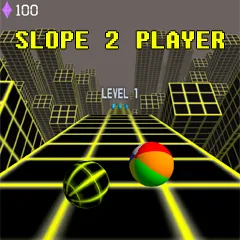


In this slope game the ball moves forward on its own. On a keyboard, use the Left and Right arrow keys; many ports also accept A and D for the same lateral nudge. On phones, look for tap zones or swipe hints the build shows on first load. Keep your gaze slightly ahead of the ball and default toward center lanes whenever the geometry allows, centering buys milliseconds when the path kinks, and milliseconds are the currency of later sections. Prefer short corrections over long holds; sawtooth steering is how clean runs end in a single frame.
What's Slope Game game?
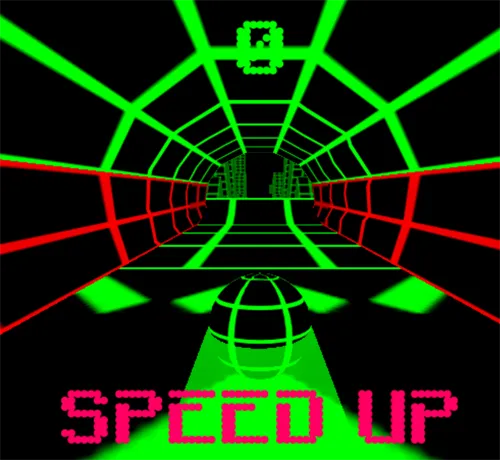
Slope is the minimalist slope game that refuses to age: a ball rolls forever through a neon-lit course, the world tilts under you, and your only job is to keep the lane honest. People still search for it simply as “slope game” because the rules are easy to describe and hard to master, no story grind, no inventory, no mid-run checkpoint, just speed that climbs the longer you survive, red geometry that ends the attempt on contact, and empty space waiting for the first sloppy line. What sounds like a toy problem becomes a lesson in attention: the track is readable only when you stop staring at the ball and read the ribbon like a road.
This build is the classic slope game loop in its purest form: high contrast, motion clarity, and a score tied to distance. Bright lanes invite trust; hazards read in red; turns arrive without ceremony. As your run grows, the gap between “I saw it” and “I moved” shrinks, which is why the same corridor can feel easy on attempt five and brutal on attempt fifty. That erosion of slack time is the real difficulty curve, and it is why the slope game format pairs so well with short breaks: one more try always feels reasonable.
On this page you get the same shell as the rest of the site, header, footer, two-column layout, green-line atmosphere, and a click-to-load embed so nothing heavy runs until you choose it. Skim the three-step guide, read the sections on habits and how this slope game compares to sequels, then use the FAQ for controls and common failure modes. When you are ready, press play and treat the first minute as calibration: the scoreboard will still be there after you remember how fast “fast” becomes.
How to Play Slope Game
1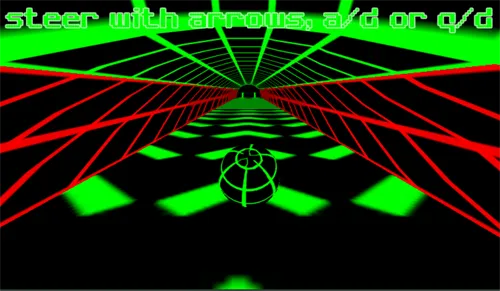
1. Steer early, read ahead, favor the middle
2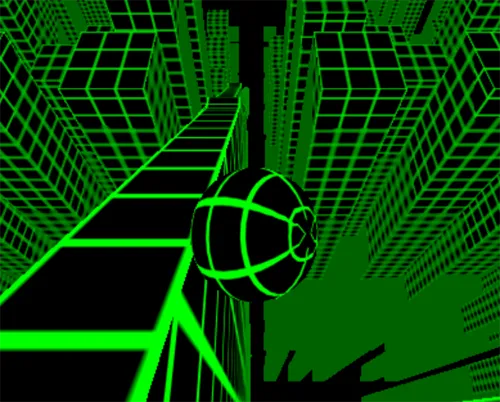
2. Treat red blocks and edges as hard stops
The core slope game rule is simple: anything that reads like a solid hazard ends the run on contact. Missing floor and out-of-bounds drops behave the same way, there is no ledge grab to save a greedy line. Scan two beats ahead so chokes, diagonal walls, and sudden gaps do not arrive as surprises. When the course opens up, do not confuse width with permission to drift; wide sections often set up a sharper turn on the other side.
3
3. Shorten inputs when tempo spikes
Every slope game in this family ramps speed as you survive. High speed rewards calm hands: tap or tap-hold with intent instead of panic carving. If you feel yourself chasing the ball, slow your inputs first, hero swerves scale terribly with momentum. Crash, restart immediately; tight retry loops turn mistakes into muscle memory faster than long breaks between attempts.
Why this slope game still feels fresh after the template went viral
Many endless runners flatten into memorizing one route. The classic slope game keeps you reactive: lanes, bends, gaps, and hard stops repeat as vocabulary, but the sequencing shifts so you are always negotiating spacing instead of replaying a single dance. Failures feel instructive, you rarely blame the build; you fix your timing on the next attempt.
Neon edges read as safe ground; red reads as danger; motion and contrast sell speed without hiding information. Good audio tightens the loop, sometimes you hear trouble a split second before your eyes parse it, which matters when the pace gets rude. None of that is fluff; it is legibility under stress for a browser slope game that has to read clearly on small screens too.
There is no mid-run revive in the template most people mean by “original slope game,” so the scoreboard measures sustained attention more than luck. That purity is why it became a break-time staple: obvious rules, a high skill ceiling, and a restart one tap away.
Where this slope game sits next to other titles on Slope2.app
If you landed here first, treat this page as the lean original slope game: one axis of steering, rising tempo, and a score tied to survival. The flagship Slope 2 on the homepage is the natural next hop when you want a different build or feature mix. Sequels and variants such as Slope 3 and Slope 3D push new obstacle vocabulary and camera language while keeping the same obsession with clean lines and personal bests.
Bookmark a few pages and rotate when your eyes fatigue, the steering habits from this slope game transfer: center bias, early reads, and disciplined inputs survive even when the palette changes.
Habits that survive higher speeds in any slope game
- Look ahead of the ball: the lane you need next is decided by what you notice now.
- Steer in bursts: smooth arcs beat zigzag panic when the corridor tightens.
- Re-center after corrections: survive a squeeze, then rebuild margin before the next squeeze.
- Keep the tab light: dropped frames make precise steering harder; close heavy background tasks if the embed stutters.
- Retry quickly: short cycles keep your hands warm and your reads honest.
None of these habits are glamorous, which is why they work. This slope game is not asking for a twenty-button combo; it is asking you to stay calm while the world tilts faster.
FAQs about Slope Game
Yes. You can launch the classic Slope build in your browser without installing anything. Because the game loads through an embedded player, performance depends on your device, browser, and network.
On PC, use the Left and Right arrow keys to steer (A and D are commonly supported as well). On mobile, follow the on-screen control hints your device shows on first load. Most classic ports are steer-only; if a build displays jump instructions, follow those for that specific version.
Hitting red obstacle blocks or falling off the course ends the run immediately. There is no checkpoint revive in the classic slope game template: you restart and try again.
Difficulty ramps with survival time or distance in most slope game runners. The course stays readable, but your reaction window shrinks as speed increases, early habits decide late outcomes.
Prioritize survival first: smooth steering, early reads, and conservative lines through tight sections. When tempo spikes, shorten inputs and trust boring centering over flashy edge work.
Typically no, once a run starts it continues until you crash or fall. Treat each attempt as a short sprint of attention, which is standard for this style of slope game.
Use the fullscreen control near the player when your browser offers it. On some mobile browsers you may need to tap the game surface once before fullscreen unlocks.