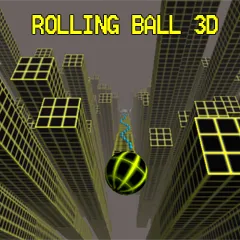



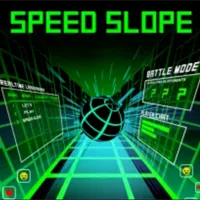


Slope Cyber gameplay video
Watch a Slope Cyber run across the cyber city rooftops before you play.
What's Slope Cyber game?
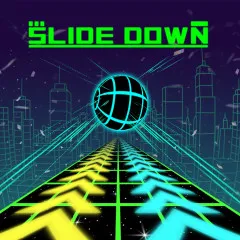
Slope Cyber is a cyberpunk themed slope game. You steer a robotic ball through a modern cyber city, racing over rooftops and neon streets, and you try to post a better score than last time. The ball keeps rolling on its own. The slopes do not end. A run stops when you crash.
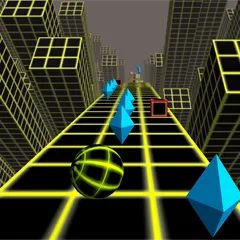
If you have played a classic slope runner, the loop will feel familiar. Slope Cyber keeps that downhill ball chase and moves it into a virtual cyber city. You are up on the rooftops more than you are on a flat neon grid. The streets below are lit. The path in front of you keeps changing. That setting is the main reason to open this page instead of another slope title.
How a run is scored
Your score in Slope Cyber goes up with the distance you cover. It also reflects how long you keep the ball on the track. There is no last stage. You stay on safe ground, you keep moving, and the number climbs. When the ball hits something it should not, that attempt is over and the score is whatever distance you reached.
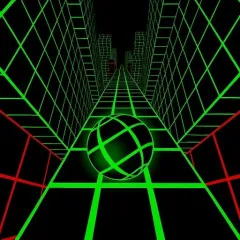
Roads in Slope Cyber do not stay one shape. Terrain switches as you go, so a wide stretch can turn into a tighter line, a gap, or a cluster of obstacles. Red objects and red areas are the hard fail. Touch those and the level ends. Gaps and other blocks are the rest of the pressure. The city is built so you cannot settle into one rhythm for long.
Gems and the Shop
Gems sit on the route while you roll. Pick them up across runs and take them to the Shop. That is where you unlock and buy new cyberballs. Slope Cyber currently has eight balls in that Shop. Each ball has its own features, so the collection is not just a picture change. A gem you grab on a short run still counts toward the next unlock.
Distance and gems are two different rewards. Distance is the score for that attempt. Gems carry into the Shop after you crash. That is why a Slope Cyber session can still feel useful when a run dies early, as long as you actually banked pickups instead of missing them.
Loot boxes and boosts
Secret loot boxes and boosts also appear along the path in Slope Cyber. A protective shield lets you push through trouble for a bit. Gravity management and other support items help the ball last longer on a slope. These are extras on top of steering. They stretch a good line. They do not make red areas safe forever.
The boost list is short. Slope Cyber is still a reflex game first. Shield, gravity management, and the other support items are there so a run can last longer when you find them. They sit on the same rooftops as the gems, which is why the path can feel busy even on a short attempt.
Who it is for
Slope Cyber is for players who want a fast downhill ball game with a cyber city look and a Shop to work toward. You play it in the browser on this page. Runs are short. Retries are immediate. The eight cyberballs give you a reason to come back after the first crash, and the rooftops give the same slope idea a different place to live.
It sits next to the other slope pages here, especially the city and neon ones, but the Shop and the cyber rooftops are what belong to Slope Cyber. Watch the clip above if you want to see the lighting and the pace. Then start a run and chase the distance.

How to Play Slope Cyber
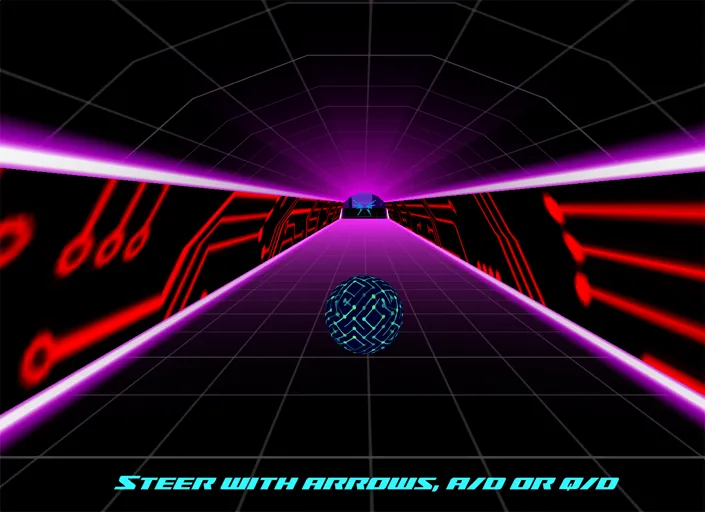
1. Read the start screen, then steer
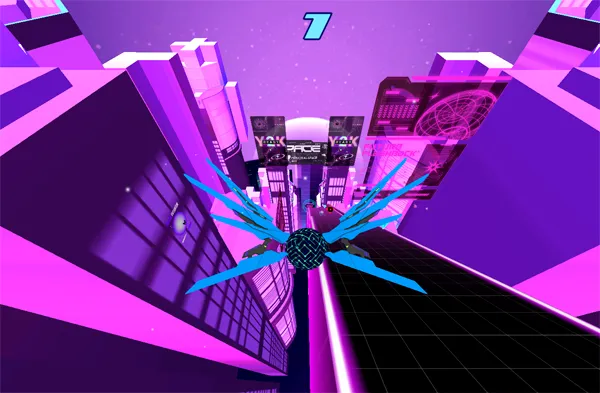
2. Race the rooftops and stay on the path
In Slope Cyber, go as far as you can. Score rises with distance. Keep the robotic ball off red objects and red areas. Those hits end the level. Steer around obstacles and gaps. Grab gems, loot boxes, and boosts that sit near your line. Use a protective shield to push through a bad stretch. Do not let the ball drift. If the main path is already hard, skip extra pickups instead of chasing every box.
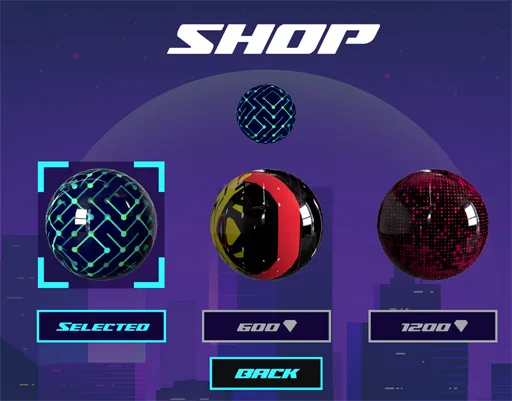
3. Spend gems in the Shop
Open the Shop in Slope Cyber to unlock and buy cyberballs with the gems you collected. There are eight balls to try right now. Each one has its own features, so it is worth checking a new ball instead of sticking with the first one forever. Buying a ball does not change the red-hit rule. It gives the next run a different ball to learn.